
|
Share to:
Related Products

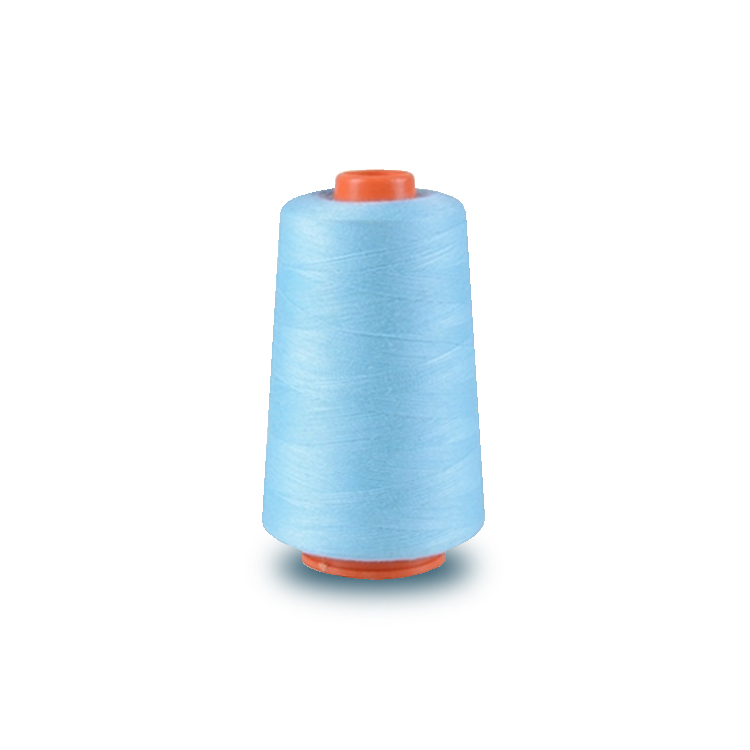

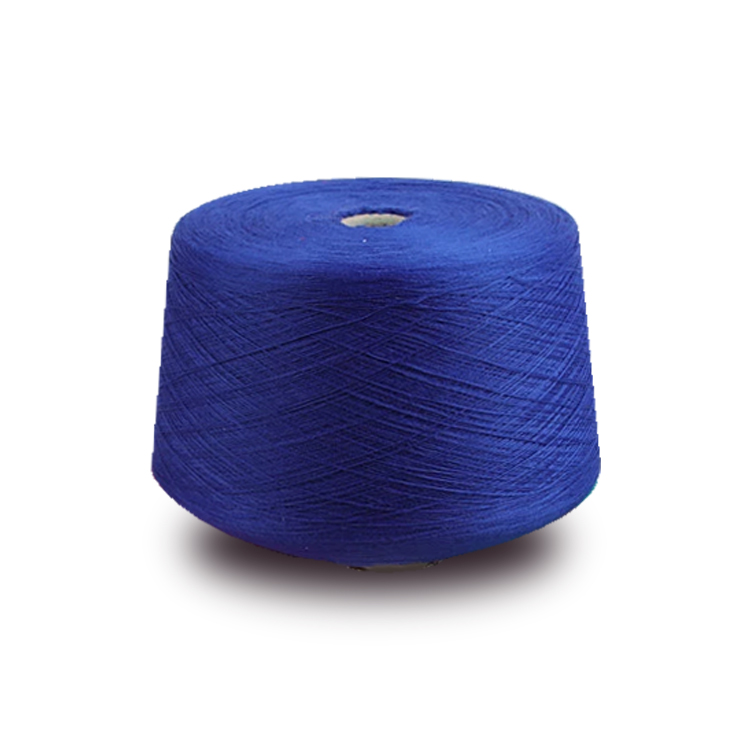
100% polyester dyed spun yarn
LQ-0412
Price: From $0.66
Delivery time: 9-20 days after payment
MOQ: 500 KG
100% polyester dyed spun yarn
Improve the wet rubbing fastness of fabrics dyed with reactive dyes in deep shade!
The main reasons for the poor wet friction fastness of textiles are the floating color transfer of water-soluble dyes and the mechanical friction transfer of colored fiber particles (10-40 μ m). The wet rubbing fastness of dyed cloth refers to the rubbing of wet white cloth with dyed cloth samples according to the specified conditions, and the contrast evaluation with the standard gray staining card according to the staining degree on the white cloth, that is, the transfer degree of dye molecules and colored fiber particles through the interface contact to the test white cloth. Under the same fabric, dye, pretreatment and dyeing conditions, the darker the color, the worse the wet rubbing fastness.
It is one of the important ways to improve the wet friction fastness of the deep shade fabrics with reactive dyes to improve the quality of textiles and overcome the barriers to export.
The water-soluble groups in the molecules of reactive dyes are beneficial to dye dissolution and dyeing, but they are the main factors that cause the poor fastness of dyed fabrics to wet friction. Due to the existence of water on wet white cloth, the reactive dyes tend to break away from the fabric and enter the water. Therefore, for the same reactive dye dye, the dry rubbing fastness can reach 4-5, and the wet rubbing fastness can reach 2-3.
Measures to improve the fastness to wet friction
1、 Selection of reactive dyes with less floatation after dyeing
Floating color is the main reason for the disqualification of wet rubbing fastness of dark color fabrics.
Floating dyes of reactive dyes, including dyes that have been adsorbed on fibers but not reacted with fibers, partially hydrolyzed dyes and vinyl sulfone dyes that have eliminated sulfates. The total amount of floating dyes can be expressed by the difference between the final dye uptake E and the final fixation f in the characteristic value serf of reactive dyes, i.e. E-F value.
Therefore, it is necessary to select reactive dyes with less floating color after dyeing, i.e. dyes with low E-F value, so as to facilitate the removal of floating color. If the fixation rate is very high, the dye will be fixed with the fiber after dyeing, and the amount of floating color can be greatly reduced.
2、 Selection of reactive dyes with high lifting power
The concentration of dyes used in deep shade dyeing is high, and the quantity of floating dyes is increased. There is a saturation value for the adsorption of dyes on fibers, and the dye concentration should not exceed 10% of the saturation value. Excessive dyes can not be dyed and fixed, and will accumulate on the fabric surface, thus affecting the wet friction fastness of the dye.
Reactive dyes with high lifting power must be used for deep color.
3、 Reasonable dyeing and finishing process
In addition to the correct selection of dyes, a reasonable dyeing and finishing process can also improve the wet rubbing fastness. The smoother the surface of the fabric, the higher the wet rubbing fastness, so the singeing should be clean and the colored fiber particles should be reduced. The wool effect of semi-finished dyeing directly affects the dye penetration when dyeing. The better the dye penetration, the better the dye diffusion to the fiber after dyeing, which is conducive to reducing the dye accumulation on the fabric surface. The addition of penetrant and mercerization can improve the wet rubbing fastness.
The washing degree of floating dyes is related to their directness to fibers. The most direct vinyl sulfone dyes are the most difficult to wash, followed by hydrolysis dyes.
Water quality is a very important factor. If the water hardness is high, the water-soluble groups of floating color dyes will form a lake that is difficult to dissolve in water, which will seriously affect the removal of floating color dyes.
Drying method is also very important. The molecular transfer weight of dye in contact drying is higher than that in non-contact drying.
4、 Control of pH value of dyed fabric
The amount of alkali used in the dyeing process of reactive dye deep shade fabric is high, so it is necessary to strengthen washing. The pH value of dyed fabric should be controlled at 6.5-7.5 (the technical standard of Oeko tex Standard 100 is pH value 4.0-7.5 and 4.0-9.0), so as to prevent the fading caused by the break of ether bond between vinyl sulfone group and fiber in alkaline medium.
5、 Surface finish of dyed fabrics
The worse the surface finish of the dyed fabric is, the greater the friction coefficient between the dyed fabric and the white cloth used for testing, and the larger the effective contact surface. Therefore, the wet friction fastness decreases. Eco label specifies that the wet rubbing fastness shall be at least 2-3 grades, but coarse twill denim is allowed to be 2 grades, because the friction coefficient of twill cloth is larger than that of plain cloth. Under the same conditions, the fastness of dyed fabric to wet rubbing is as follows:
Satin fabric < poplin fabric < plain fabric < twill fabric < velvet fabric < calendered fabric < regular fabric < fleece fabric
6、 Fabric strength damage
Many finishing agents will damage the strength of fabric at the same time of improving function, such as durable iron free resin initial shrinkage, flame retardant and sanitary finishing agent, which will reduce the DP of cotton fiber, increase the colored fiber particles, and reduce the wet friction fastness.
7、 Special fixative
The special fixing agent can improve the wet rubbing fastness of the dyed fabrics with deep shade reactive dyes by 0.5-1.0, and the requirements are as follows:
(1) The polymer compound that can form film is polyurethane or organosilicon with functional group (- Oh, - NH2), and has crosslinking agent and polymer, which makes it have durability and rapid film formation.
(2) No color change, no yellowing, no reduction of sun fastness.
(3) It can reduce fabric friction coefficient and improve fabric handle.
(4) The wearability of cotton fabric is still maintained.