
|
Share to:
Related Products



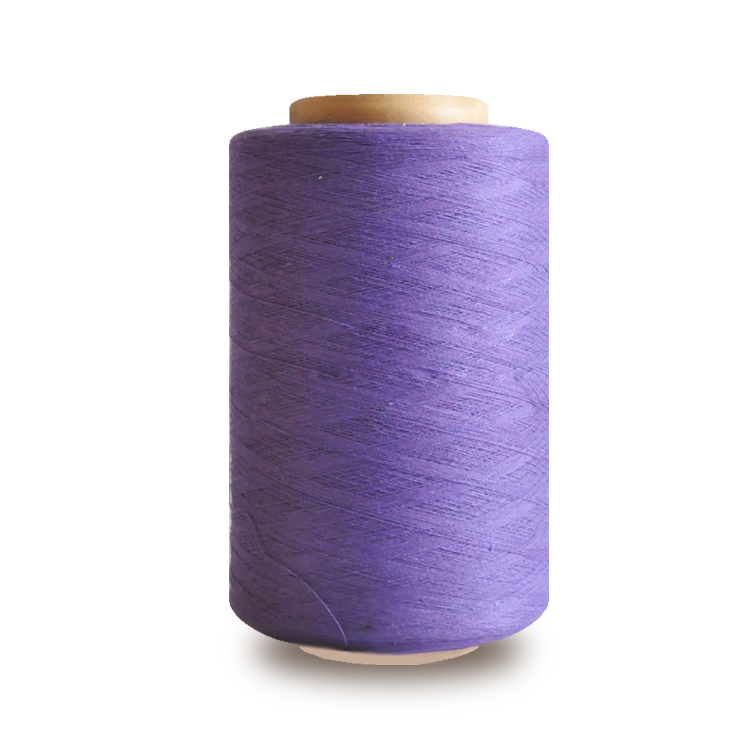
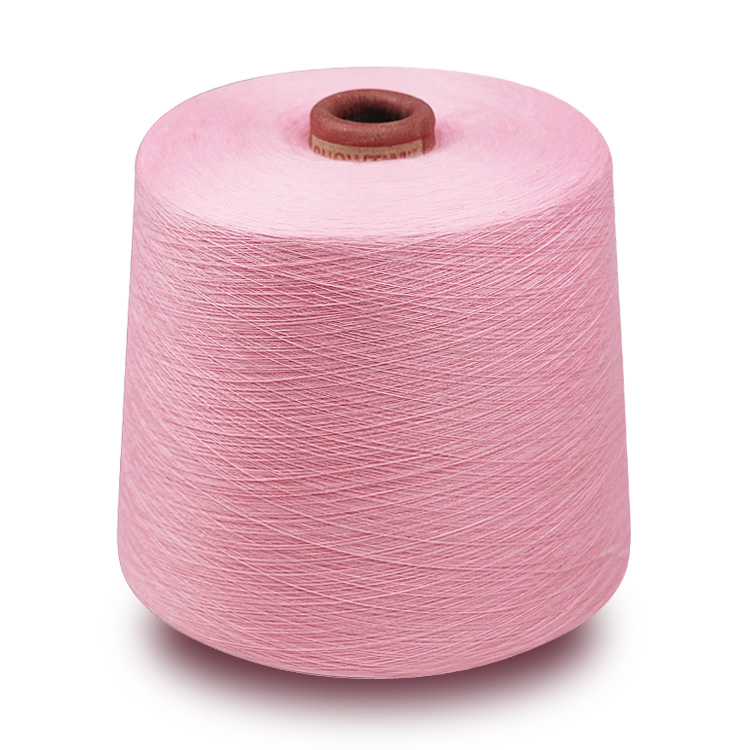
402 100% polyester dyed spun yarn
LQ-0412
Price: From $0.66
Delivery time: 9-20 days after payment
402 100% polyester dyed spun yarn
dyeing and finishing
definition
The process of chemical treatment of textile materials (fibers, yarns and fabrics). Dyeing and finishing, together with spinning, weaving or knitting, forms the whole process of textile production. Dyeing and finishing includes pretreatment, dyeing, printing and finishing. The quality of dyeing and finishing has an important impact on the use value of textiles. Pretreatment, also known as scouring and bleaching, is mainly aimed at removing impurities from textile materials so that subsequent dyeing, printing and finishing can be carried out smoothly and the expected processing effect can be obtained. Dyeing is a physical or chemical combination of dyes and fibers to make textile materials have a certain color. Printing is the use of color paste to obtain color patterns on textiles. Finishing is to improve the appearance of fabric such as luster and shape through physical action or chemical agent; to improve the wearability of the fabric or to make it water and oil repellent. Most finishing is carried out in the later stage of dyeing and finishing. In the dyeing and finishing of wool fabrics, many pretreatment processes are classified into finishing category, and finishing is divided into wet finishing and dry finishing.
form
Dyeing and finishing are usually carried out on a single machine. According to the process requirements, some single machines can be connected in sequence to form a combined machine for continuous production. The common combined machine is composed of rolling, steaming, washing and drying equipment, especially suitable for the processing of large quantities of products. Some of the dyeing and finishing of fabrics can be carried out in rope shape, while others can be carried out in an open width state. Rope processing efficiency is higher, open width processing is not easy to produce wrinkles. The dyeing and washing of wool and weft knitted fabrics are usually carried out in the form of rope. Due to the easy deformation of knitted fabric, wool fabric, silk fabric and synthetic fiber fabric, the tension should be reduced as much as possible during dyeing and finishing, and loose type equipment should be used for processing.
nature
Most of the processes of dyeing and finishing are chemical processes. After chemical processing, textile materials have to be washed repeatedly and dried. The consumption of heat and water is very large, and the requirements for water quality are relatively high. In the process of chemical treatment, harmful substances will be produced to pollute the air and water. Therefore, in determining the process and designing the equipment, we must try to reduce the consumption of heat energy, improve the utilization rate of water and reduce pollution.
developing process
The development of dyeing and finishing is closely related to the development of fiber production, chemical industry and electromechanical industry. Before the first World War, the objects of dyeing and finishing were all natural fiber products, of which the cotton textile was the largest, followed by wool textile, and then hemp and silk fabrics. After that, viscose fiber, acetate fiber and other chemical fibers began to be produced in large quantities. Especially after the Second World War, the rapid growth of synthetic fiber production made great changes in the structure of textile products, and new processing technologies appeared in dyeing and finishing. The chemicals and dyestuffs used in dyeing and finishing are natural products, and the processing procedures are cumbersome and time-consuming. After a large number of acid, alkali and bleaching powder are produced, they are used for dyeing and finishing pretreatment, the processing efficiency is greatly improved, and the original processing mode of pretreatment is changed. The development of synthetic dyes makes people get rid of the dependence on natural dyes, and provides a large number of dyes for dyeing and printing, which are bright in color and not easy to fade. Synthetic chemical finishing agents have developed modern chemical finishing such as wrinkle resistance, durability and water repellency. Since the 1940s, dyeing and finishing equipment has developed rapidly in the aspects of continuity, reduction of fabric tension, improvement of processing efficiency and automatic control of temperature, solution concentration, equipment running speed and other process conditions by using electronic technology, which improves processing efficiency and product quality. With the development of production and the improvement of people's living standards, the social consumption of textiles is constantly changing. The demand for indoor and outdoor decoration and industrial fabrics is increasing. People not only require colorful and colorful fancy fabrics, but also have the properties of easy washing and no ironing. Special requirements are put forward for some special fabrics, such as flame retardant and oil repellent. Therefore, dyeing and finishing technology will continue to develop and improve.
Our polyester sewing yarn in dyeing and finishing technology is also constantly updated, from the previous strand form of polyester, spandex, nylon, low elastic yarn, polyester filament, to the direct one-time dyeing of various loose tubes of different materials, there have been earth shaking changes in just a few years.